When evaluating shot blasting costs, companies often compare blasting wheel power, electricity consumption, or abrasive costs. However, for more demanding workpieces, the largest cost is often something else entirely, ensuring consistent and repeatable quality.
When a specific surface roughness must be achieved across all surfaces of a workpiece, even minor variations can result in rejected parts, additional processing, or customer complaints. In such cases, the cost of shot blasting is no longer primarily related to energy consumption, but rather to process stability.
When is a conventional shot blasting machine no longer enough?
In one of our recent projects, the customer's requirements included:
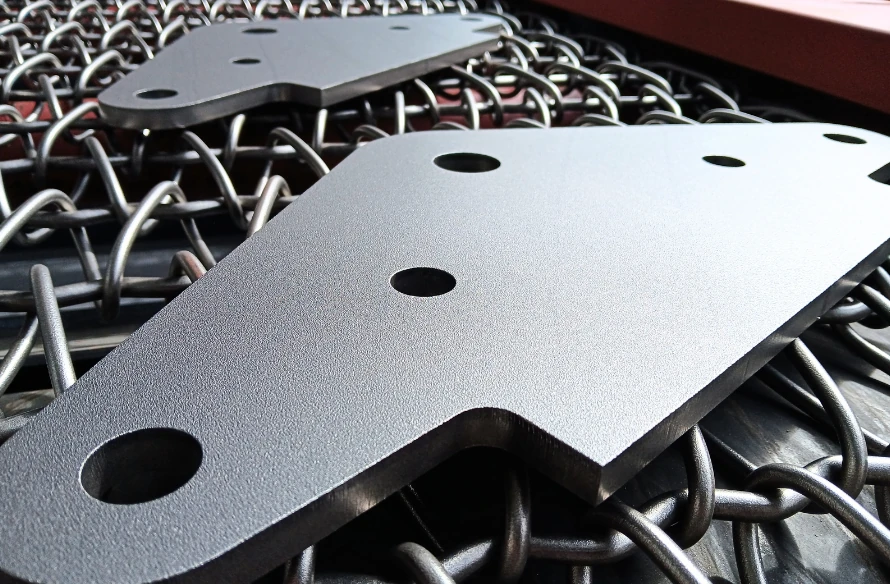
- surface roughness Rz < 15 μm,
- process capability Cpk ≥ 1.2,
- uniform treatment of all workpiece surfaces.
For complex geometries, achieving this level of repeatability with conventional handling methods is difficult. As a result, a different approach was required.
An additional advantage of a robotic shot blasting machine is the ability to combine different surface treatment technologies within a single system. In addition to shot blasting, the system can also incorporate air blasting nozzles, enabling the treatment of hard-to-reach-areas, localized adjustments of blasting intensity, and the execution of more demanding surface preparation processes.
This combination brings together the high productivity of shot blasting and flexibility of sand blasting, opening up new possibilities for the treatment of complex workpieces.
How to ensure uniform treatment of every workpiece
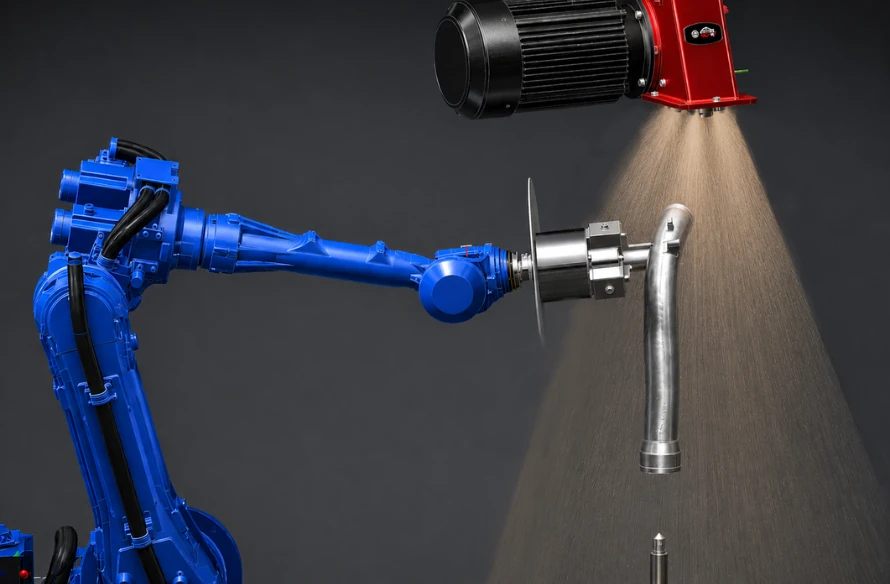
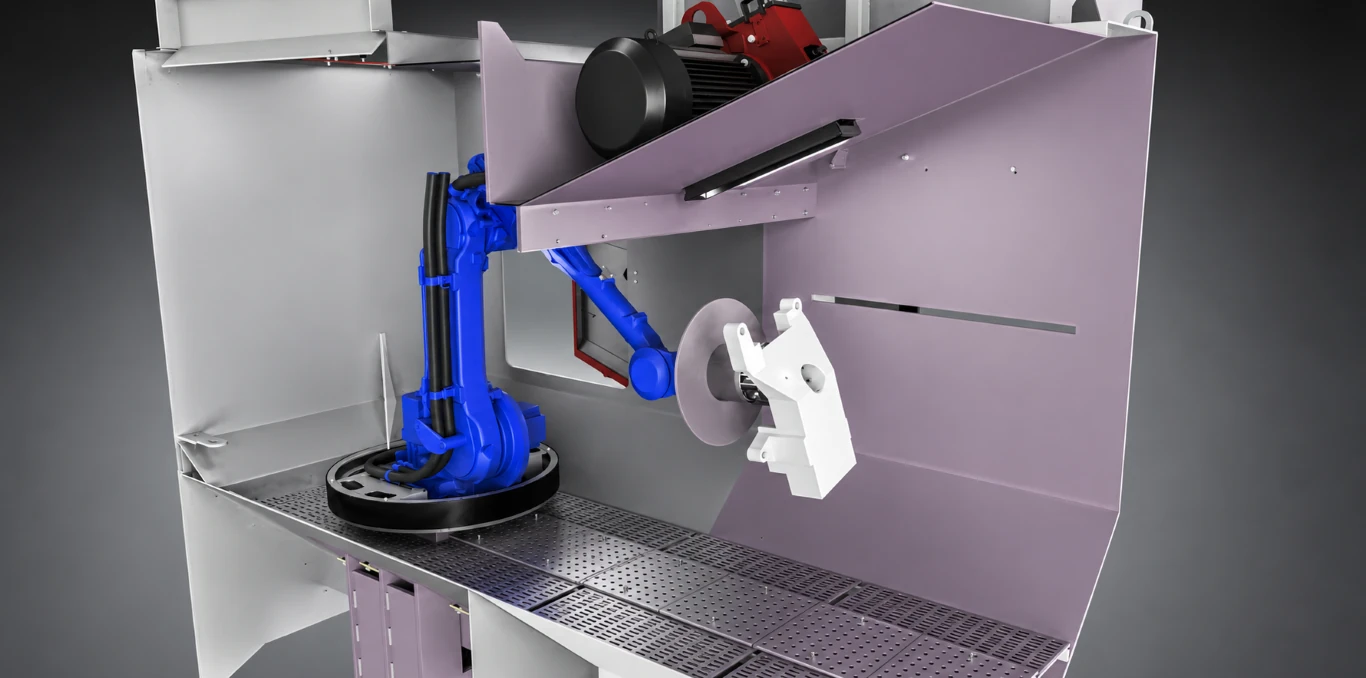
A robotic shot blasting machine differs from conventional systems in that the robot is located directly inside the blasting chamber. The robot picks up the workpiece from its fixture and guides it through the blasting process using a precisely programmed motion path.
This makes it possible to maintain fully repeatable blasting conditions, significantly reducing variations in surface roughness and the number of non-conforming parts.
The main advantage of this approach include:
- repatable surface treatment quality,
- reduced roughness variations,
- fewer rejected parts and customer complaints,
- less need for rework and corrective operations,
- improved process stability
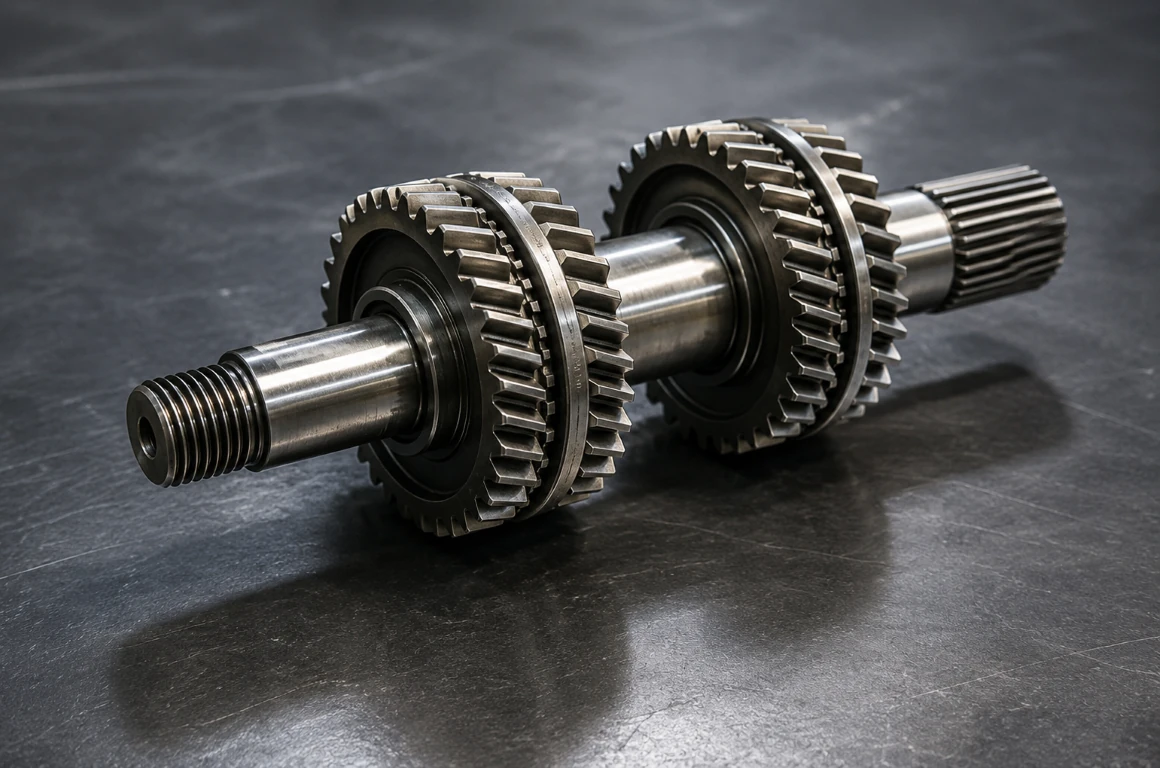
Shot peening of gears requires perfect repeatability
A robotic shot blasting machine also opens up new possibilities for shot peening applications. A good example is gear processing, where multiple gears are mounted on a single shaft.
In such applications, achieving the required surface roughness is not the only objective. Equally important is ensuring a uniform shot peening intensity across all gears. Even minor deviations in workpiece positioning can affect the compressive stresses induced in the surface layer, and, consequently, the service life of the component.
By using a robot, it is possible to ensure precise and repeatable positioning of the entire gear assembly relative to the blasting stream. This results in greater process stability, improved repeatability, and more consistetn shot peening results.
Heavy workpieces are a different story
A robotic shot blasting machine is not only intended for applications with demanding surface roughness requirements. It also offers significant advantages when processing heavy and complex workpieces.
The robot can automatically pick up the workpiece, rotate it during the process, and position it so that all surfaces are optimally exposed to the abrasive stream.
This provides several important benefits:
- automated handling without additional preparation,
- optimal exposure of all surfaces,
- reduced physical workload for operators,
- increased process productivity.
What was the biggest development challenge?
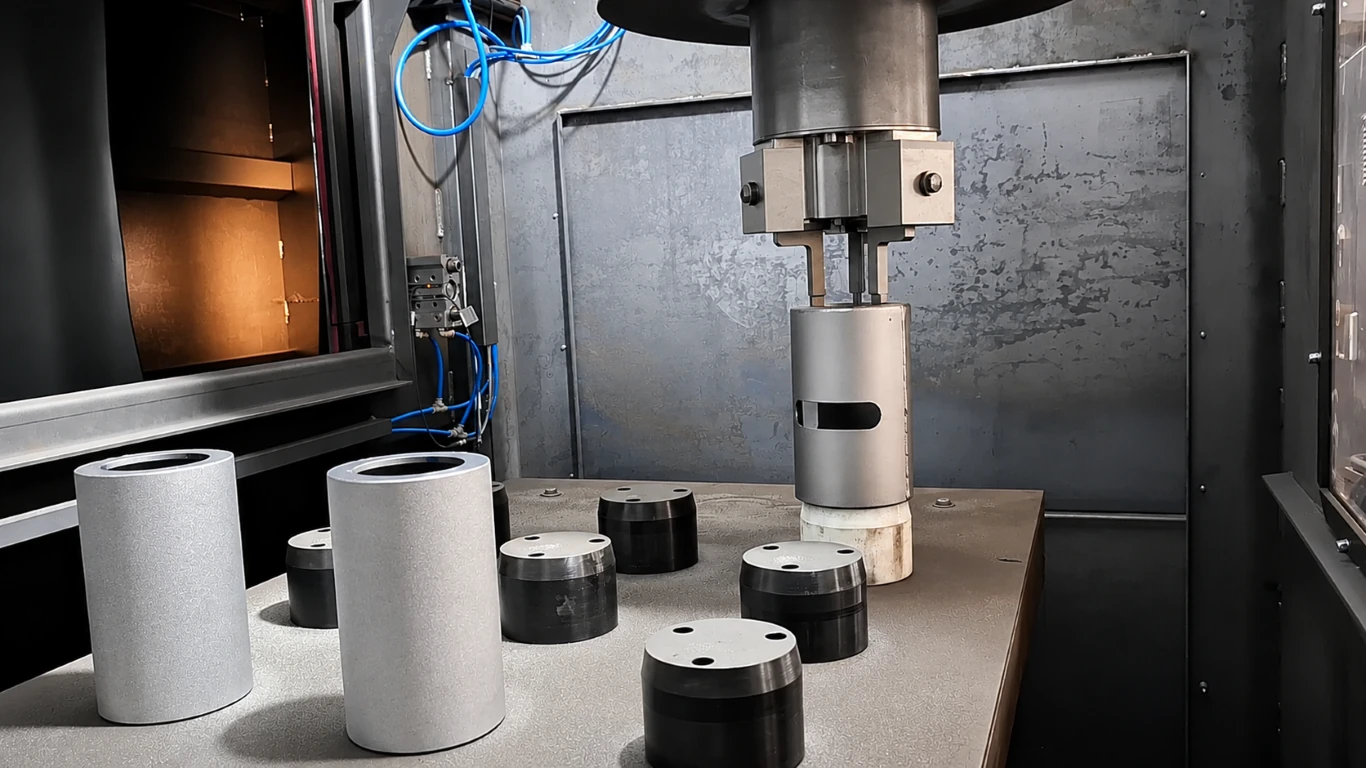
The robot itself was not the biggest challenge during development. Protective covers for industrial robots used in shot blasting applications are already highly advanced and have been proven in numerous industrial environments.
A much greater engineering challenge was the design of the gripping head that holds the worpiece and is directly exposed to the abrasive stream. The gripping system must ensure highly repeatable positioning while withstanding severe wear and preventing abrasive dust from entering the pneumatic components.
To meet these requirements, the grippers are manufactured from tool steel to provide exceptional wear resistance. The pneumatic gripping unit is housed within a protected enclosure and further shielded by specially designed PU bellows, preventing dust from reaching the guides and other moving components.
What about the cost of shot blasting per hour?
In robotic applications, electricity consumption is often not the decisive factor. The greatest savings result from improvements to the overall process, including:
- fewer rejected parts,
- fewer customer complaints,
- reduced manual handling,
- shorter cycle times,
- improved process capability (Cp/Cpk),
- complete process traceability.
For this reason, in such projects it is often more meaningful to focus on the cost per workpiece rather than considering only the machine's operating cost per hour.
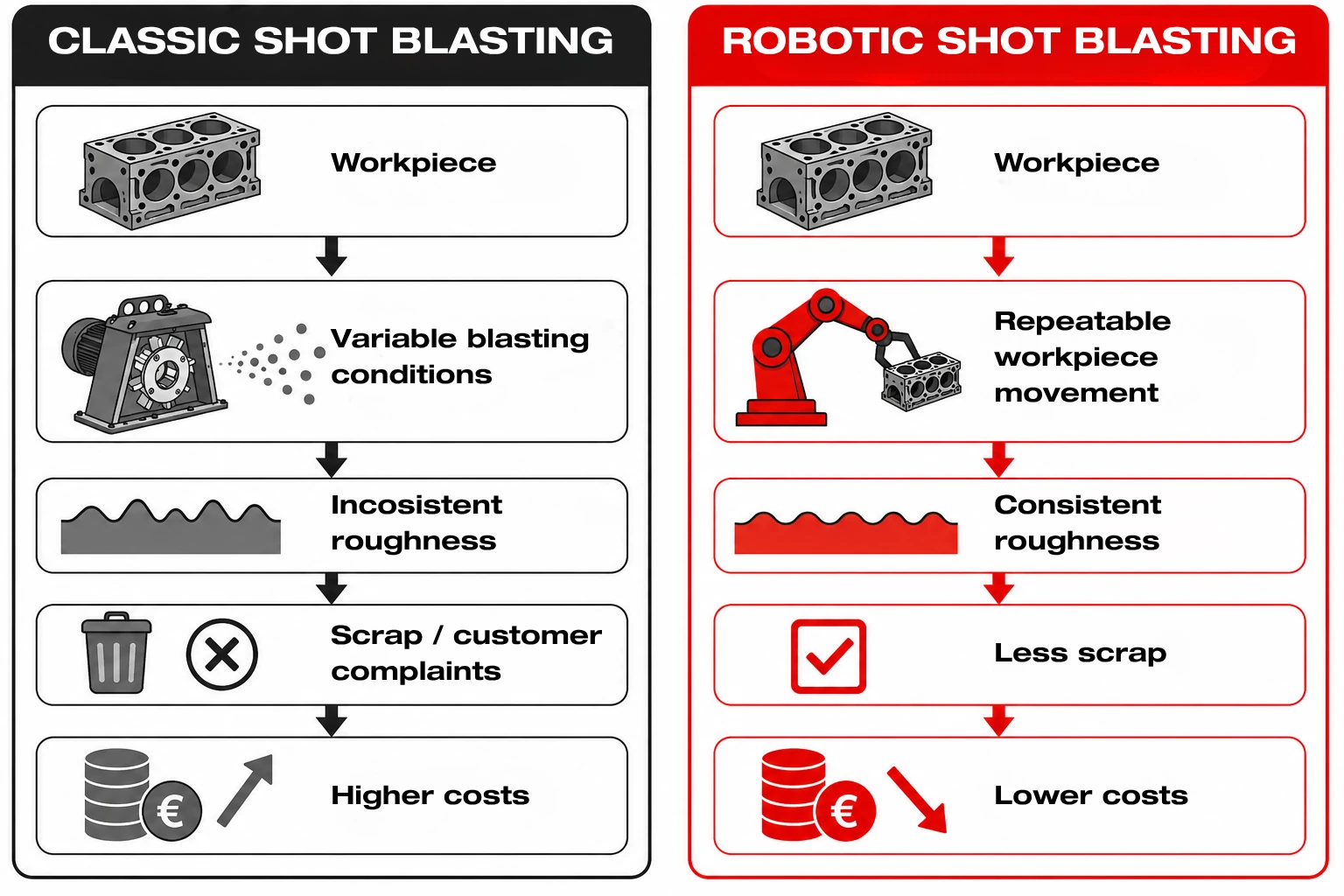
In demanding applications, the greatest savings are often not related to electricity consumption, but rather to reducing process variations and ensuring repeatable quality.
By combining high productivity, repeatable quality, and fully automated handling, a robotic shot blasting machine delivers a new level of process control. Its flexibility makes it an ideal solution for demanding shot peening applications as well as for the treatment of complex and heavy workpieces.
Would you like to find out whether robotic shot blasting is the right solution for your products? Contact us at marketing@gostol-tst.eu.