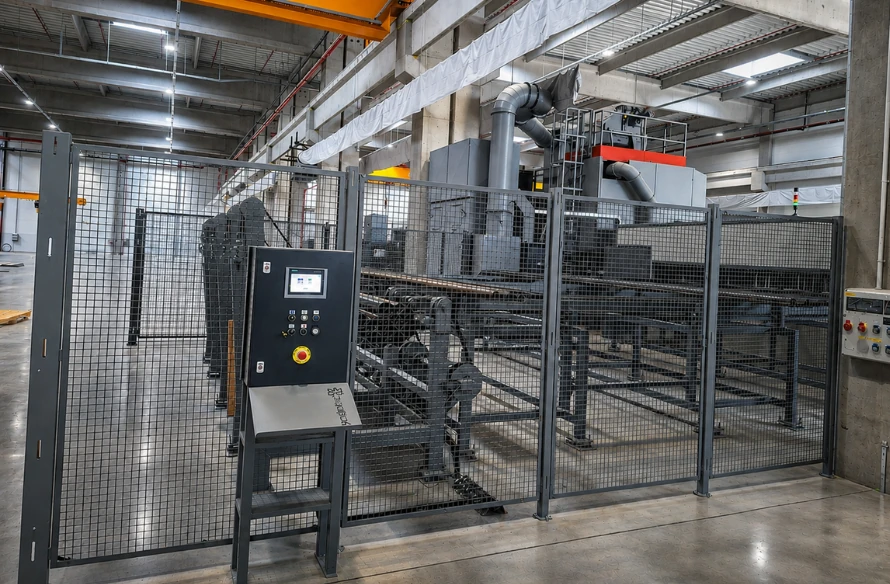
A company specialized in the distribution of metallurgical materials and metal processing services continues the modernization of its production with a new investment in surface treatment technology.
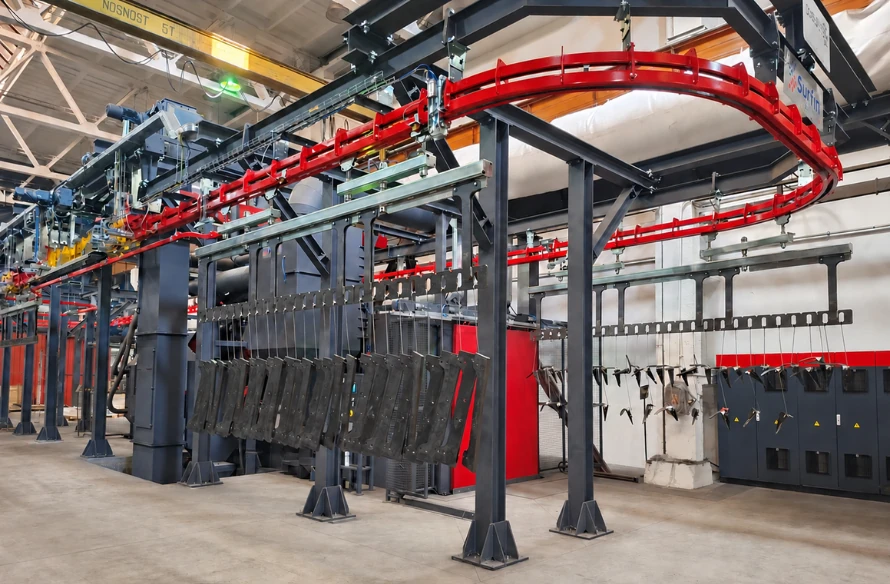
Following the successful delivery of the VPP-800x2000 shot blasting machine in 2019, this year we completed the delivery of the PC-25/223 pipe shot blasting machine.
Both machines are integrated into different technological processes for pipe preparation. With the existing VPP machine, pipes are first cut, followed by the preparation and welding of connections, after which the shot blasting and painting processes are performed.
The new PC-25/223 shot blasting machine enables a more advanced and significantly more automated production flow. Pipes are first shot blasted, then cut by a laser system and fitted with welded connections, followed by the painting process.
The VPP shot blasting machine is currently installed in the existing production hall, while the ongoing expansion and modernization of production also include its relocation to a new production area.
Automated pipes preparation process
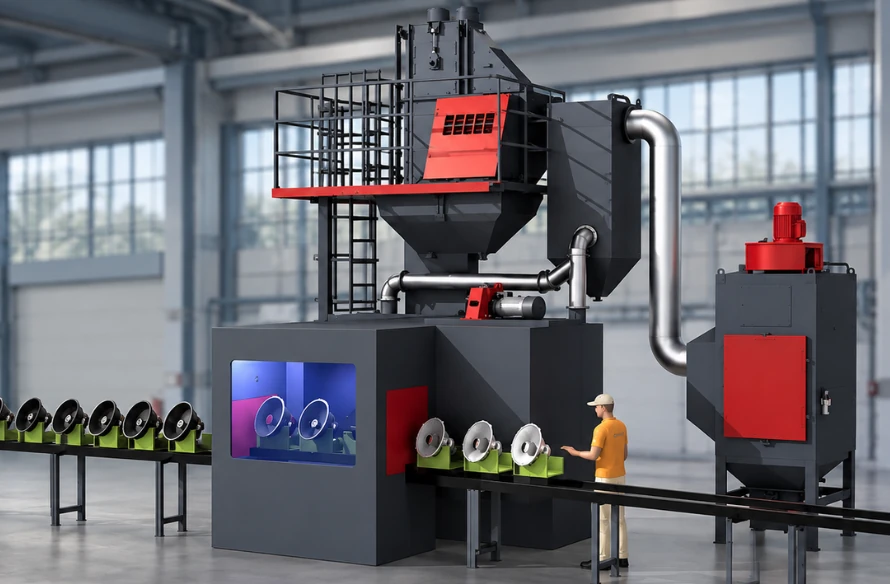
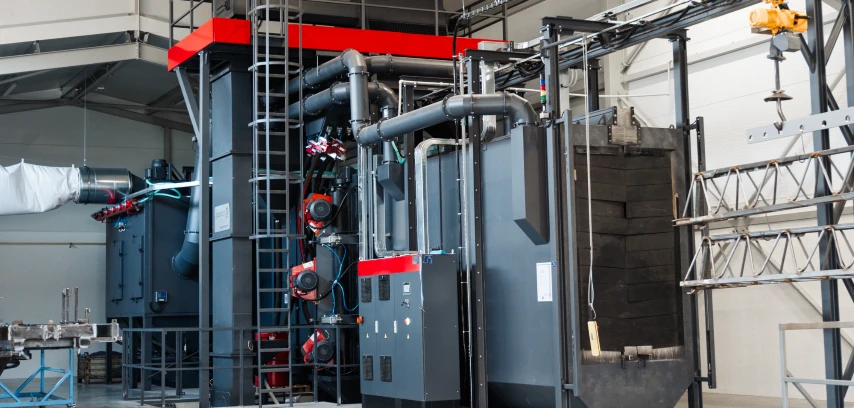
The PC-25/223 shot blasting machine is designed for shotblasting of external surfaces of pipes and round bars. One of the machine's key advantages is the high level of automation throughout the entire process, as it includes automatic loading, transport, rotation, and unloading of pipes in addition to the shot blasting process itself.
Special attention is given to material handling before and after blasting, ensuring a continuous production flow and efficient integration with subsequent processes such as laser processing, welding, and painting.
The machine is capable of processing pipes with diameters ranging from 25 mm to 223 mm and lengths of up to 6,200 mm. The system capacity depends on the dimensions and type of pipes being processed.
Before shotblasting
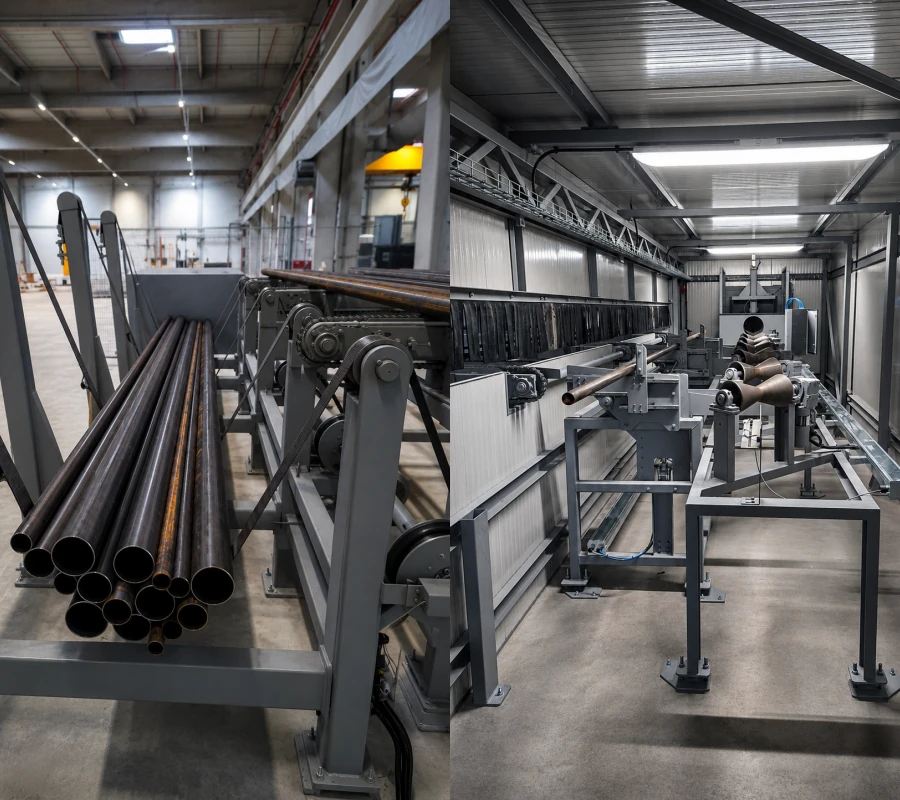
Untreated pipes are loaded by crane or forklift onto the automatic bundle pipe feeding system. The pipes are then automatically separated and transported via a chain conveyor to the infeed section of the shot blasting machine.
The pipe feeding and separation system allows automatic adjustment according to the selected pipe diameter and processing parameters through recipes stored in the machine's PLC control system.
Before entering the shot blasting machine, the system additionally checks the actual pipe diameter and compares it with the selected recipe. This prevents unsuitable pipes from entering the process, which could otherwise cause longer downtimes of the entire production line.
After shotblasting
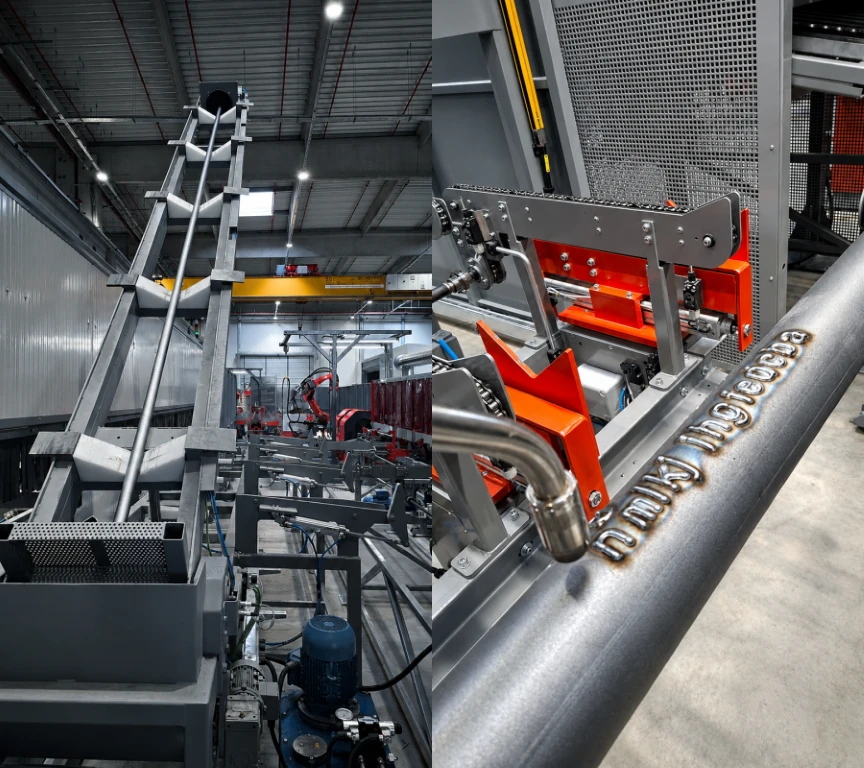
After the shot blasting process is completed, a pneumatic manipulator transfers the pipes to the abrasive removal system. The pipes are positioned individually into a vertical position, allowing the steel abrasive accumulated inside the pipes during the blasting process to be removed.
The collected abrasive is returned to the shot blasting machine via a screw conveyor and reused in the process. After the abrasive removal process, the pipes are automatically transferred onto the roller conveyor of the next production operation.
Cleaner and quieter working environment
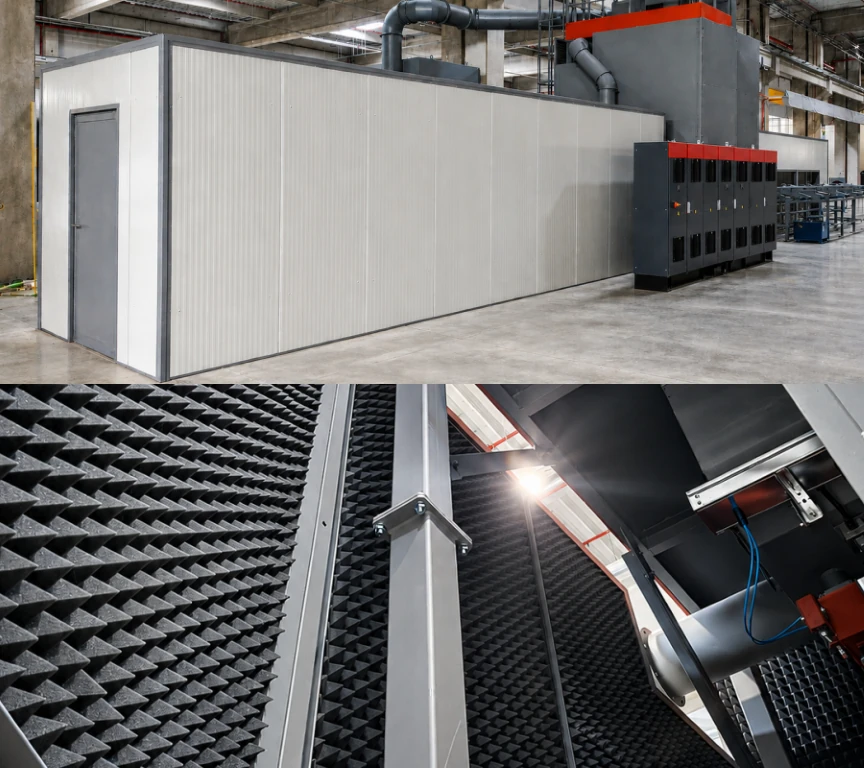
The machine is additionally equipped with noise and dust protection at both the infeed and outfeed sections. This prevents dust from escaping into the production area and reduces the possibility of dust accumulation in subsequent processes, especially during pipe welding and painting.
The additional protection also significantly contributes to lower noise level and improved working conditions within the production environment.
The project represents an important step toward a higher level of production automation, improved process stability, and more efficient integration of individual production operations into a unified technological process.
For additional information, please contact us at marketing@gostol-tst.eu.